
Call-out or first hour: $80–$180
What most Sydney plumbers charge to attend and start work. Ask for it on the phone. Anyone who will not name it has answered a different question.
A licensed, insured plumbing crew working the streets around Randwick week in and week out. Everyday repairs and planned work, priced up front, finished in one visit wherever the parts allow.
Most people meet a plumber at the worst possible moment, which gives the trade a reputation for emergencies it only half deserves. The larger part of the work is planned and unglamorous: a hot water system reaching the end of its life, taps and mixers that have started to weep, toilets that run, a gas appliance that needs connecting properly, and the rough-in behind every bathroom and kitchen renovation.
We work across Randwick, Coogee, Kingsford, Kensington and the wider Eastern Suburbs, which matters more for the small jobs than the large ones. A tap washer is not worth a ninety minute drive to anybody, and that is exactly how suburbs get quietly neglected by operators covering the whole city from one depot.


The most common apartment call is not from the lot with the fault. It is from the one underneath, looking at a stain. Water tracks along beams and slab falls, so the visible damage is frequently nowhere near the source.
This is where non-destructive detection matters most, because the alternative is opening ceilings on a guess in a home that is not the one with the problem. Find it first, then open exactly one thing.
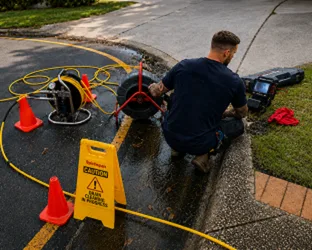
Randwick’s Victorian terraces and Federation homes still run on original clay drains prone to cracks and root intrusion. CCTV shows us the full picture.
The skill on a period property is not the plumbing, it is getting to it. Lath and plaster, original tiling, pressed metal, tessellated verandah floors and cedar joinery are all things that cost far more to reinstate than the repair underneath them costs to complete.
So the sequence matters: locate precisely first, open the smallest possible area, and agree what gets cut before anything does. Detection gear earns its keep here more than anywhere else.
The expensive mistakes in a fit-out happen in the first week, not the last. Fixture positions that need a waste where there is a beam, a coffee machine that needs more flow than the existing line will give, a grease arrestor sized for the previous tenant's menu rather than yours.
Bring a plumber in at the drawings, not at the handover. An hour spent over a plan changes what is possible; the same hour after the slab is poured only changes the price.
The moment worth planning for is a renovation. New fixtures, a second bathroom or a kitchen moved to the other side of the house all put more through a line that was sized and laid for a smaller household.
A camera run before the tiler starts costs a fraction of what it costs afterwards, and it is the difference between finding a sagging section while the slab is open and finding it through a finished floor. If you are getting quotes for a bathroom, get this done in the same fortnight.
Licensed plumbing work in NSW gets a Certificate of Compliance, and drainage work is notified to the water authority. It is not paperwork for its own sake: it is what a conveyancer, an insurer or the next buyer asks for when a line is queried.
Keep them with the property file along with any camera footage. On older pipework it is genuinely valuable to be able to show what was found, what was done and when, rather than starting the argument from scratch at sale time.
Commercial premises frequently carry a testable backflow prevention device, and it carries an annual test obligation with results lodged to the water authority. It is one of the quieter compliance items and one of the easiest to inherit unknowingly when a lease changes hands.
If you are not certain whether your site has one, or when it was last tested, it is worth ten minutes to find out. Accredited testing is a specific endorsement on a plumber's licence, so ask for it directly rather than assuming.
Plumbing, draining and gasfitting are licensed trades in NSW, and the licence is public. You can put a name or a number into the NSW Fair Trading register and see the licence class, its status and whether it is current, in about thirty seconds.
It is a reasonable thing to do and no honest tradesperson minds. Our licence number is on this page, on the van and on every invoice. Anyone reluctant to give you theirs has told you something useful.
What most Sydney plumbers charge to attend and start work. Ask for it on the phone. Anyone who will not name it has answered a different question.
The standard weekday range once the first hour is done. After-hours and weekends sit higher, because someone is out of bed for it.
Tap and mixer replacements, toilet repairs, a failed valve, swapping tired flexible hoses. Attendance plus the work plus minor parts.
Elements, thermostats, valves and anodes on a tank with life left in it. A full replacement is quoted separately and depends on the unit.
Renovation rough-in, gas line work, anything needing excavation or a second pair of hands. You get a written figure before it starts.
These are market ranges, not our quote. The price for your job is agreed before anything begins. Figures here are indicative of the 2026 Sydney market rather than a quote from us, you get your own number as a fixed price before any work starts.
You get a tradesperson on the phone rather than a booking agent reading a script. Most faults can be narrowed down from the description alone, including the ones that do not need a visit.
Whoever is working closest to Randwick takes it, which is why same-day is usually possible and why the van already carries what the job is likely to need.
We find the actual cause rather than the visible symptom, show you, and give you a fixed figure. You decide with the number in front of you.

The repair is finished and proven on the spot, the site is left tidy, and any certificate the work requires comes with it.
Describe it and we will tell you whether it is a plumber, a gasfitter or neither, and whether it is worth doing today or booking for the week.
Licensing, pricing, timing and the things worth asking before anyone starts.

Phone is quickest. The form works just as well, and it reaches the crew covering Randwick rather than a national call centre.

Leave your details and our local Randwick team will call you back fast.